Acid Neutralizers in Putnam, Westchester & Fairfield County
Blue-green stains and pinhole leaks in copper pipes usually mean acidic, low pH well water, which Cassidy Plumbing fixes at the source. An acid neutralizer raises the pH before the water reaches your plumbing, and we also repair the leaks it has already caused.
Emergency Service Available 24/7
Or request service online →
What customers say about our acid neutralizer work
4.9 stars from 400+ Google reviews
Signs your water is acidic
Low pH water is corrosive. It slowly dissolves the copper and brass it travels through, and the signs build up over time.
Fix the water, then the pipes
We test pH along with hardness and iron, since all three affect which neutralizer fits. If you’ve already had pinhole leaks, we repair them and check the rest of the copper while we’re there.
Raising the pH stops new damage, but it can’t undo corrosion that has already thinned a pipe. If a section is close to failing, we’ll show you and let you decide.
Our acid neutralizer maintenance plan tops off the media and tests the pH once a year.
Calcite neutralizers
Backwashing tanks for mildly acidic water, the most common setup in our area.
Stronger media and feed systems
For very low pH, a blended media or a soda ash feed pump.
Pinhole leak repair
Leaks fixed, damaged sections replaced and the rest of the copper checked.
What pH means for your plumbing
pH measures how acidic or basic water is, and 7 is neutral. Many wells in our area run below that, and the lower it goes, the faster copper corrodes.
Acidic water can also pull metal from pipes and solder into the water you drink. If your home has older plumbing, a lead and copper test at the tap shows what’s getting through. Our water testing page explains how that works.
How an acid neutralizer works
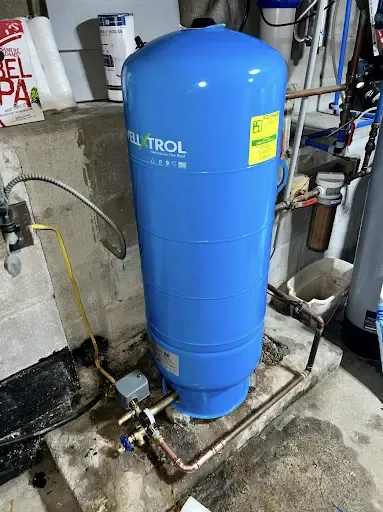
- Water flows through a tank of calcite, a natural mineral similar to limestone.
- The calcite slowly dissolves and brings the pH up toward neutral.
- Very low pH may need a stronger media blend or a soda ash feed.
- The media gets used up as it works, so it’s topped off on a schedule.
If the test also shows hardness, a softener goes after the neutralizer.
Why homeowners call Cassidy
✓ Water and pipes, one visit
The same team that fixes the leak fixes the water that caused it.
✓ Led by a master plumber
Founder Pat Cassidy is a master plumber, and we’re licensed and insured in New York and Connecticut.
✓ Family-owned since 1997
Based in Carmel, NY, and still run by the family that started it.
✓ We answer 24/7
Every day of the year, nights and holidays included. Your call always reaches a tech.
✓ We clean up
When we leave, the work area looks the way it did before we arrived.
✓ We explain the work
We show you what we found and walk you through the fix in plain language.
✓ Full price before work starts
You get the full price before any work starts, so there are no surprises on the bill.
Acid neutralizer questions, answered
Why do my copper pipes keep getting pinhole leaks?
Acidic water is one of the most common causes on private wells. Fast-moving water and stray electrical current can do it too, so we test the pH and look at the piping. Fixing the leak without fixing the water usually means another leak later.
Will an acid neutralizer make my water hard?
A little, because the mineral it uses dissolves into the water. Most homes never notice, but if your water is already hard, a softener after the neutralizer takes care of it. We plan the two together when the test calls for both.
How often does neutralizer media need refilling?
Usually once a year, though very acidic water uses it up faster. If the blue-green stains come back, the media is probably running low. We check the level and the pH at every service.
Is the blue-green stain in my tub from copper?
On a well with copper pipes, it almost always is. A pH test confirms it in minutes. Hard water leaves white or tan crust, not blue-green.
More questions? See our FAQ.