Reverse Osmosis Systems in Putnam, Westchester & Fairfield County
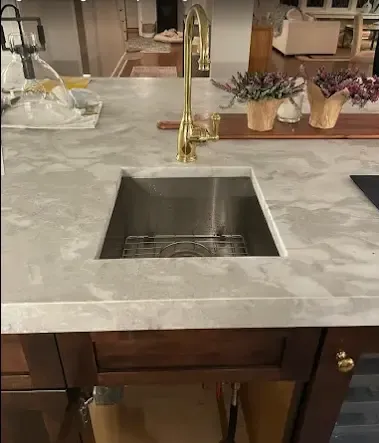
Cassidy Plumbing installs reverse osmosis systems under the kitchen sink, with their own faucet for drinking and cooking water. It handles things a softener or whole-house filter doesn’t, like nitrates, arsenic and lead.
Emergency Service Available 24/7
Or request service online →
What customers say about our reverse osmosis work
4.9 stars from 400+ Google reviews
When reverse osmosis makes sense
Reverse osmosis is a point-of-use system: it treats the water you drink, not every tap in the house. These test results usually lead to one.
Installation and service
We install the system under the kitchen sink with its own faucet, and can run a line to the fridge or ice maker. On a well, we check your water pressure first, since reverse osmosis needs enough of it to work well.
The filters and membrane wear out on a schedule. A system with clogged filters slows down and stops doing its job.
Our reverse osmosis maintenance plan replaces the prefilter and membrane and tests the water twice a year.
New RO systems
Under-sink units with their own faucet, sized to how much drinking water you use.
Fridge and ice maker lines
Filtered water piped to the fridge, so ice and water match the tap.
RO repair
Slow flow, leaks, a tank that won’t fill or a faucet that drips.
What reverse osmosis removes
- Nitrates and nitrites in well water.
- Arsenic in well water. A dedicated arsenic filter is the other option.
- Lead and copper from city water or older plumbing.
- Pharmaceuticals and PFAS at the drinking tap.
- Dissolved minerals and salt, including the sodium a softener adds.
The EPA says infants under six months who drink water with high levels of nitrate can become seriously ill (EPA). The EPA also lists arsenic and lead among the heavy metals that, at high levels, can cause liver, kidney and intestinal damage (EPA).
How a reverse osmosis system works
- Water passes a sediment and carbon prefilter that protects the membrane.
- Your water pressure pushes it through the membrane, which holds back dissolved contaminants.
- Treated water fills a small storage tank under the sink.
- A final filter polishes the taste on the way to the faucet.
Not sure what’s in your water yet? Book a water test first.
Why homeowners call Cassidy
✓ We confirm it works
If a test found something, we suggest testing again after the install to prove it’s gone.
✓ Led by a master plumber
Founder Pat Cassidy is a master plumber, and we’re licensed and insured in New York and Connecticut.
✓ Family-owned since 1997
Based in Carmel, NY, and still run by the family that started it.
✓ We answer 24/7
Every day of the year, nights and holidays included. Your call always reaches a tech.
✓ We clean up
When we leave, the work area looks the way it did before we arrived.
✓ We explain the work
We show you what we found and walk you through the fix in plain language.
✓ Full price before work starts
You get the full price before any work starts, so there are no surprises on the bill.
Reverse osmosis questions, answered
Does a reverse osmosis system treat the whole house?
No, it treats water at one faucet, usually the kitchen sink. That’s where you drink and cook, and it keeps the system small. If something needs treating at every tap, we use whole-house equipment instead.
Why is my reverse osmosis faucet so slow?
An RO faucet runs slower than a regular tap by design. A big drop usually means clogged prefilters, a worn membrane or low air pressure in the storage tank. Changing the filters on schedule fixes most of it.
Can reverse osmosis remove nitrates from well water?
Yes, reverse osmosis is the usual choice for nitrates and nitrites at the kitchen tap. Test again after the install to confirm the level dropped. Keeping the filters and membrane on schedule keeps it that way.
Does a reverse osmosis system waste water?
It sends some water down the drain to rinse the membrane, which is how it works. Newer systems send less, and a permeate pump can cut it further. We size the system so it isn’t running more than it needs to.
More questions? See our FAQ.