Water Softeners in Putnam, Westchester & Fairfield County
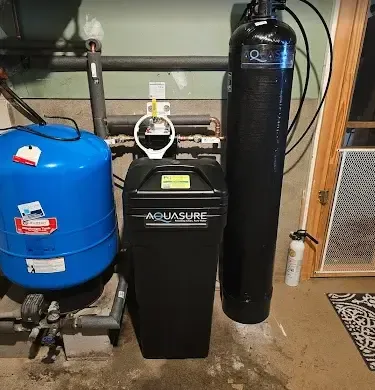
Cassidy Plumbing installs water softeners to stop the white crust, spotty dishes and water heater scale that hard water leaves. We install, repair and service them on well and city water.
Emergency Service Available 24/7
Or request service online →
What customers say about our water softener work
4.9 stars from 400+ Google reviews
Signs your water is hard
Hard water is common on wells across our area, and some town water runs hard too. You usually see it before you ever test for it.
How we handle hard water
We start with a test for hardness and iron, because both decide which softener fits and how to set it. Then we size the unit to your household and your water.
If you already have a softener, we try to repair it before we talk about replacing it. The usual fixes are a stuck control valve, a brine tank that won’t draw, worn seals or worn-out resin.
Our water softener maintenance plan covers salt refills, setting checks and a full cleaning once a year.
New softener installation
Sized to your hardness, iron level and water use, with a bypass valve so it’s easy to service.
Softener repair
Control valves, brine tanks, injectors, seals and resin on all major brands.
Settings and tune ups
Regeneration set to your real hardness, so you don’t waste salt or water.
What a softener treats
- Hardness on well water. Calcium and magnesium cause scale, spotty dishes and a shorter water heater life.
- Hardness on city water. Some municipal supplies run hard too, and the fix is the same.
- Light iron. A softener can catch small amounts of dissolved iron. Heavier iron or manganese needs an iron filter in front of it.
A softener doesn’t take out bacteria, nitrates or PFAS. If your test shows any of those, we’ll explain the equipment that does.
Your softener options
- Single-tank softener. The standard choice for most homes. It regenerates overnight while you sleep.
- Twin-tank softener. Two resin tanks take turns, so soft water never runs out. Good for big households and heavy use.
- Softener with a filter ahead of it. When iron, sulfur or sediment show up too, a filter goes first and protects the resin.
Not sure how hard your water is? Start with a water test.
Why homeowners call Cassidy
✓ We test before we recommend
Every softener we suggest is based on your water results, not a guess.
✓ Led by a master plumber
Founder Pat Cassidy is a master plumber, and we’re licensed and insured in New York and Connecticut.
✓ Family-owned since 1997
Based in Carmel, NY, and still run by the family that started it.
✓ We answer 24/7
Every day of the year, nights and holidays included. Your call always reaches a tech.
✓ We clean up
When we leave, the work area looks the way it did before we arrived.
✓ We explain the work
We show you what we found and walk you through the fix in plain language.
✓ Full price before work starts
You get the full price before any work starts, so there are no surprises on the bill.
Water softener questions, answered
Will a water softener make my water taste salty?
No. A softener trades hardness minerals for a small amount of sodium, and most people can't taste it. If you'd rather avoid the sodium, we can use potassium instead of salt or add a reverse osmosis faucet for drinking water.
How often do I need to add salt to my softener?
Most homes add a bag or two a month, depending on how hard the water is and how much you use. Check the brine tank every few weeks and keep it at least a quarter full. If the salt level never drops, the softener probably isn’t regenerating.
How long does a water softener last?
A well-kept softener often runs 10 to 15 years. The resin inside may need replacing sooner, especially when iron is in the water. That’s one reason we test for iron before we size a new one.
Do I need a softener if I’m on town water?
Sometimes. Some municipal water in our area runs hard enough to leave scale, and some doesn’t. A hardness test at your tap settles it before you spend anything.
More questions? See our FAQ.