Backflow Preventers & Pressure Reducing Valves in Putnam, Westchester & Fairfield County
Cassidy Plumbing tests water pressure and fixes it with pressure reducing valves (PRVs). We also install backflow preventers and test them every year.
Emergency Service Available 24/7
Or request service online →

What customers say about our backflow and pressure valve work
4.9 stars from 400+ Google reviews
Signs your water pressure is off
Pressure that runs too high wears out everything it touches, and pressure that's too low makes every shower a chore. High pressure is easy to miss because it feels like a strong shower. These are the clues it's doing damage, along with the signs pressure is too low.
Pressure valves and backflow preventers
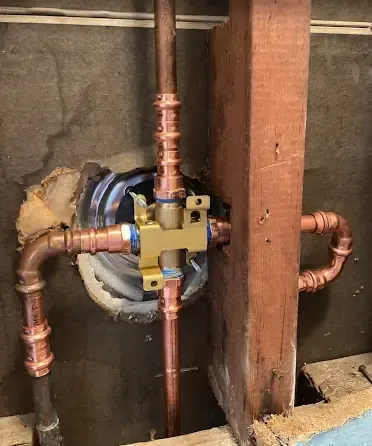
Homes on city water often have a pressure reducing valve where the main line enters, and those valves wear out or drift over the years. We put a gauge on your system, then adjust the valve or replace it so pressure lands in a safe range.
A backflow preventer is a different device with a different job: it keeps water from flowing backward into the drinking supply. We install and repair the type your connection calls for, from irrigation systems to boiler fill lines, and test it each year where that's required.
With the Cassidy Gold Membership, a yearly whole-home plumbing inspection gives us a chance to recheck your pressure before it causes trouble.
Pressure testing
A gauge reading at the house to see where your pressure actually sits.
Pressure reducing valves
A drifting valve reset, or a worn one replaced and set to a safe pressure.
Certified backflow testing
A yearly test of your backflow preventer by a certified tester, with the results explained.
Backflow preventer installation
The right device for irrigation, boiler fill lines and outdoor connections.
Backflow preventer repair
Leaking or failed devices rebuilt or replaced.
Thermal expansion tanks
Added where a closed system lets pressure build as water heats.
High pressure or low pressure?
- Too high: banging pipes, a weeping relief valve, running toilets and hoses that fail early. Usually a missing, failed or misadjusted pressure reducing valve.
- Too low everywhere: often a clogged or failed pressure reducing valve, a partly closed main valve, or old galvanized pipe narrowed by rust.
- Low at one fixture: almost always a clogged aerator, showerhead or fixture valve.
Why homeowners call Cassidy
✓ We measure first
A gauge reading tells us whether pressure is really the problem.
✓ Parts on the truck
Common pressure reducing valves and fittings travel with us.
✓ Led by a master plumber
Founder Pat Cassidy is a master plumber, and we’re licensed and insured in New York and Connecticut.
✓ Family-owned since 1997
Based in Carmel, NY, and still run by the family that started it.
✓ We answer 24/7
Every day of the year, nights and holidays included. Your call always reaches a tech.
✓ We clean up
When we leave, the work area looks the way it did before we arrived.
✓ We explain the work
We show you what we found and walk you through the fix in plain language.
✓ Full price before work starts
You get the full price before any work starts, so there are no surprises on the bill.
Water pressure and backflow questions, answered
What water pressure should my house have?
Most homes do well somewhere around 40 to 60 psi, measured at an outdoor spigot or laundry tap with a simple gauge. Above about 80 psi, fixtures, valves and appliance hoses wear out faster. We can test it and adjust or replace the valve that controls it.
My water pressure suddenly dropped. Could the pressure reducing valve be the cause?
Yes, a pressure reducing valve can fail closed or clog with debris and starve the whole house. Low flow at a single faucet is more often an aerator or valve at that fixture. We check the main valve first when every tap is weak at once.
Does a house on a well need a pressure reducing valve?
Usually not. On a well, pressure is set by the pressure switch on the well pump system, not by a reducing valve. If your well pressure is off, our page on well pumps and pressure tanks covers what controls it.
Why do some homes need a backflow test every year?
The springs and check valves inside a backflow preventer can wear out or stick open with no sign from the outside. A failed device can let irrigation or boiler water flow back toward the drinking supply, so many water suppliers require a yearly test. We do certified backflow testing and rebuild or replace any device that fails.
Why would my home need a backflow preventer?
A backflow preventer stops water that has left your drinking supply from being pulled back into it. Lawn irrigation, boiler fill lines and some outdoor hose connections are common places for one. Your water supplier may require a specific type for certain connections.
More questions? See our FAQ.