
Leak Detection & Pipe Repair in Putnam, Westchester & Fairfield County
A hidden leak quietly rots wood, drywall and flooring, so Cassidy Plumbing finds it first and opens as little as possible. We repair the pipe, and when the plumbing is too far gone, we repipe part or all of the house.
Emergency Service Available 24/7
Or request service online →
What customers say about our leak detection work
4.9 stars from 400+ Google reviews
Signs of a hidden leak
Most leaks give a warning before they do real damage. Any one of these is worth a call.
Finding the leak, then fixing the pipe
We start by confirming there is a leak and narrowing down where, shutting off sections of the plumbing and checking which one is losing water. Only then do we open the wall, ceiling or floor, right where the problem is.
A single bad spot on sound pipe is a straightforward repair. When the pipe around it is corroded, pinholed or decades-old galvanized steel, we'll lay out the options, from replacing one run to repiping the whole house, with the full price for each before work starts.
A yearly inspection with the Cassidy Gold Membership is a good way to catch a slow leak before it shows up on the ceiling.
Leak detection
We narrow the leak down by section before opening any wall or ceiling.
Pipe repair
Split, corroded or pinholed sections cut out and replaced with new pipe.
Whole-house repiping
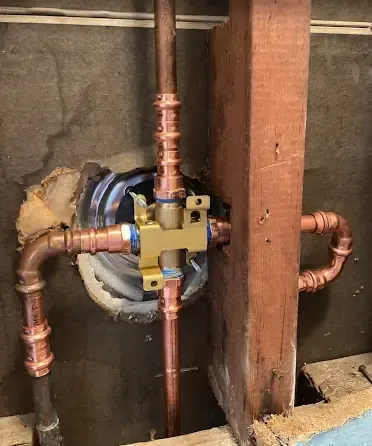
Old galvanized or failing copper replaced with new copper or PEX.
Partial repiping
Just the problem runs, such as a bathroom group or a line in a cold wall.
Shutoff valve replacement
Stuck or weeping valves swapped so you can close the water when it counts.
Slab and under-floor leaks
Lines under concrete or floors located, then repaired or rerouted.

Water pouring out right now?
A burst or split pipe is an emergency, not a leak hunt. Close the main shutoff, turn off the water heater if water is reaching it, and call us at any hour.
Our burst pipe repair page walks through what to do while you wait.
Why homeowners call Cassidy
✓ Small openings, not big ones
We pinpoint the leak first, so repairs disturb as little of the house as possible.
✓ Honest repair or repipe advice
You see the pipe’s condition and decide with the full picture.
✓ Led by a master plumber
Founder Pat Cassidy is a master plumber, and we’re licensed and insured in New York and Connecticut.
✓ Family-owned since 1997
Based in Carmel, NY, and still run by the family that started it.
✓ We answer 24/7
Every day of the year, nights and holidays included. Your call always reaches a tech.
✓ We clean up
When we leave, the work area looks the way it did before we arrived.
✓ We explain the work
We show you what we found and walk you through the fix in plain language.
✓ Full price before work starts
You get the full price before any work starts, so there are no surprises on the bill.
Leak and pipe repair questions, answered
How do I check for a hidden leak using my water meter?
Turn off every faucet, appliance and the ice maker, then write down the meter reading or watch its small leak dial. Wait an hour without using any water. If the reading moved, water is escaping somewhere, and we can track down where.
My house is on a well with no water meter. How do I spot a leak?
Listen for the well pump. If it kicks on while nobody is using water, something is drawing from the pressure tank, often a running toilet or a leak in a line. We can isolate each branch of the plumbing to find it.
Should I patch the leaking pipe or repipe the whole house?
One leak on otherwise healthy pipe gets a repair. When we keep finding pinholes, corrosion or old galvanized steel, patching turns into a cycle, and repiping usually ends it. We show you the condition of the pipe so the choice is yours.
Why does my copper pipe keep getting pinhole leaks?
Pinholes in copper are often caused by water chemistry, especially acidic well water that eats the pipe from the inside. Repairing the leak fixes today's drip, but the cause needs treatment too. Our page on acid neutralizers explains how low pH is corrected.
Is PEX or copper better for repiping?
Both last when installed well. PEX is flexible, needs fewer fittings inside walls and holds up better to freezing, while copper is rigid and time-tested. We'll explain which suits your house, your water and how much wall we'd need to open.
More questions? See our FAQ.